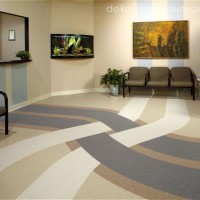
 It is produced by mixing and pressing natural materials such as linoleum, linseed oil and hemp fabric plastered with cork powder, offering different natives with unique colors and patterns, environmentally friendly, suitable for human health, solvent-free, practical, generally, 2 m width and 25-30 It is a type of floor covering produced in rolls of m length.
Due to its linoleum coating, foot sound absorbency, elasticity and abrasion resistance; residence, office, hospital, classroom and so on. can be used safely in places.
The natural ingredients in linoleum flooring are as follows;
31% Linseed oil (linseed oil)
5% Resin of pine trees
28% Wood flour and / or mushroom flour,
15% Limestone (Calcium Carbonate)
5% Titanium Dioxide (mineral used for bleaching)
7% Aluminum Hydroxide (mineral extracted from rock)
0.5% Natural pigments (Mineral dye pigments)
0.5% Stabilizer (prevents the effects of heat and ultraviolet light)
8% Natural jute fiber base (fiber obtained from the stem of the jute plant)
Linoleum flooring is a type of coating that will easily meet your expectations in terms of being both useful and aesthetic.
General Properties of Linoleum Flooring Materials
It is quite flexible.
It is resistant to oil and cigarette burns.
There are many color options.
It does not harm the environment.
It is economical.
It absorbs noise.
It is cheap.
Complies with EN ISO 24011 standard.
There are two types of linoleum:
1) Jute (fiber obtained from the stem of the jute plant) is a quality coating with a marble imitation painted on the texture and the thickness varies between 2-8 mm. Their patterns are interlaced. They are particularly suitable for healthcare facilities as they do not hold bacteria.
2) The raw material is the same as the other coating, but different in manufacture and is a 2 mm thick nitrolac paint with printing patterns.
How to Make Linoleum Floor Covering?
Before laying the rolls, they should be kept upright for at least 24 hours at a minimum room temperature of 18 ° C in order to adapt to the climatic conditions of the place where they will be mounted, and this temperature must be maintained during the application.
The temperature of the application floor should be at least 18 ° C.
The relative humidity of the application area should be between 50% and 60%.
Linoleum floor covering tiles should be stored in flat and small stacks in their packages.
If the application will be made on floors with underfloor heating, the functioning of the heating system should be tested before laying. The heating system must be turned off 48 hours before the start of the application and must remain off for at least 48 hours after the application is completed.
Floor Preparation: The subfloor should be flat, balanced, clean, unmarked, solid, dry, hard, smooth and not exposed to moisture. The preparation, dryness and laying procedures of the substrate by controlling the absorbency level should be in accordance with the relevant standard in force in the country of use.
Before determining a leveling screed, it should be checked what kind of traffic it will be exposed to after the floor covering has been laid. A standard leveling screed may not be suitable, especially for areas subject to heavy, heavy, narrow wheeled vehicle traffic.
Preparation of Linoleums: Linoleums in roll / tile form should be cut to the desired length 24 hours before installation, spread on the floor or perpendicular to the room temperature.
In the cutting phase; The tiles should be laid in a checkerboard pattern, paying attention to the design details to be laid, such as the doorway, joints, the direction of the light, the shape of the room.
Linoleum Bonding: An acrylic (transparent plastic) adhesive should be used for linoleum on the entire subfloor.
Before gluing, one edge of the linoleum is cut with the edge cutter, the joint is determined with the marking pen, the second edge is cut and after gluing, it is mounted so that it overlaps.
The bonding process ends by applying pressure with a heavy roller.
Welding: At least 24 hours after the assembly, grooves are opened on the joints on the whole floor using a welding rod and welding is performed.
Skirting System: It is the most frequently used system specially prepared to order.
Post-Application Considerations: After laying linoleum, it should not be walked on the floor for 48 to 72 hours, furniture should not be placed or moved. The applied surface should not be exposed to heavy traffic at the first stage, otherwise it will cause the adhesive to come out from under the floor covering.
If other works such as renovation and construction will continue after flooring, it should be protected with chipboard or plywood to prevent damage to the linoleum coating.
Linoleum Floor Cleaning And Maintenance
Vacuuming, wet and dry mopping can be done, as well as varnishes recommended by the manufacturer. Excessive use of water should definitely be avoided during cleaning.
Linoleum Floor Covering Prices
Another reason for choosing linoleum floor coverings is that it offers a very reasonable cost. It offers the expected performance and aesthetics.
 Flooring Systems